
Most culinary herbs grown in Canadian gardens originate from Mediterranean climates — warm, dry summers and mild winters with rare frost. Adapting them to Canadian growing conditions requires working with, not against, the country's climate realities. The Canadian growing season spans roughly 90 to 180 days depending on region, with outdoor herb growing concentrated between mid-May and late September in most provinces.
This guide covers the commonly grown culinary herbs — basil, rosemary, thyme, mint, oregano, chives, dill, and parsley — with specific attention to frost date timing, starting methods, and harvest windows relevant to Canadian growers.
Understanding Canadian Hardiness Zones and Frost Dates
Agriculture and Agri-Food Canada publishes a Plant Hardiness Zones map that divides the country into zones based on winter minimum temperatures. Most populated areas of southern Canada fall between Zone 4b (colder parts of Alberta, Manitoba, and Quebec) and Zone 8b (coastal British Columbia). The zone determines which perennial herbs survive winter outdoors — rosemary, for example, is only reliably winter-hardy to Zone 7 or 8, meaning most Canadian growers treat it as an annual or bring it indoors.
Beyond hardiness zones, the last spring frost date and first autumn frost date bracket the outdoor growing season. Environment and Climate Change Canada provides historical frost probability data for most weather stations. In Ottawa, the average last spring frost falls around May 10–15, and the first autumn frost arrives around October 5–10. In Calgary, the last spring frost averages May 21, with the first autumn frost as early as September 10 in some years — a growing window of less than four months.
Basil (Ocimum basilicum)
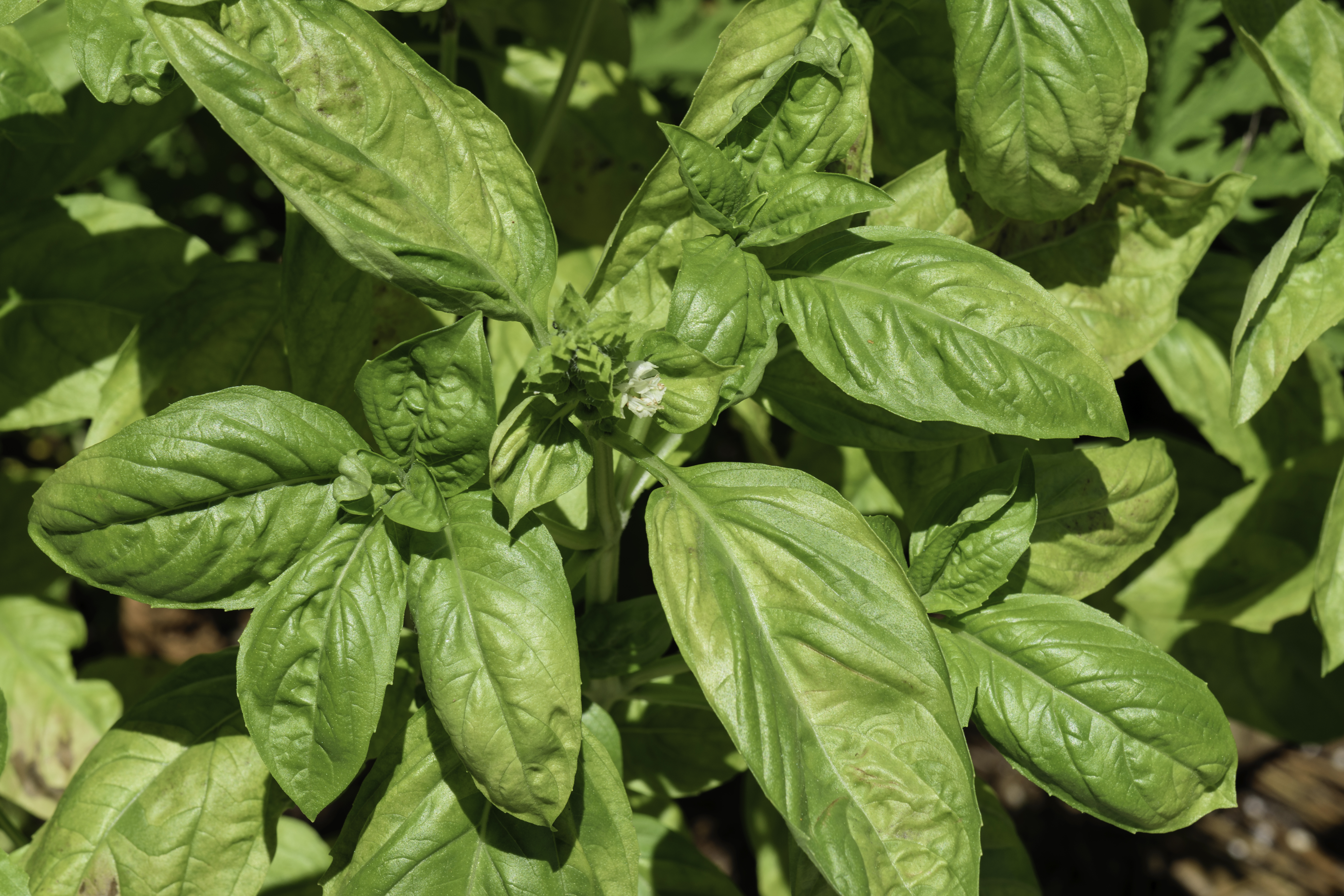
Basil is the most temperature-sensitive common culinary herb. It does not tolerate soil temperatures below 10°C and will show chilling injury at air temperatures below 7°C for extended periods. Direct seeding outdoors is practical only in Vancouver and the mildest parts of southern Ontario after late May. Everywhere else, starting seeds indoors 6 weeks before the last expected frost gives transplants the head start they need.
Transplant outdoors only after nighttime temperatures are consistently above 12°C — typically late May to early June for most of Ontario, Quebec, and the Prairie provinces. Plant in a full-sun location with well-drained soil amended with compost. Once established, pinch off flower heads as soon as they form to keep leaves productive. A basil plant that bolts concentrates energy into seed production and the leaves become smaller and more bitter within 1–2 weeks.
In Calgary and Edmonton, where early September frosts are possible, basil harvests are often compressed into July and August. Growing under a row cover or cold frame can extend the window by 2–3 weeks on either end.
Rosemary (Salvia rosmarinus)

Rosemary is a woody perennial that overwinters outdoors reliably only in Zone 7 and warmer — meaning coastal British Columbia and some sheltered parts of the Okanagan. In the rest of Canada, it must be brought indoors before the first hard frost (temperatures sustained below -5°C). A rosemary plant grown in a container can be moved into a cool, bright indoor spot — ideally a south-facing window where it receives 6 or more hours of light per day — and brought back outside the following spring.
Outdoors, rosemary needs full sun, excellent drainage, and soil that leans slightly alkaline. It tolerates dry conditions better than wet ones — overwatering causes root rot more often than under-watering does. Container-grown plants in Canadian summers benefit from weekly deep watering with the soil allowed to dry partially between waterings. A terracotta pot drains and breathes better than plastic, which matters in the wet springs of coastal regions.
Harvest by snipping stems rather than stripping individual leaves. Removing no more than one-third of the plant at a time keeps it from going into shock before the season ends.
Thyme (Thymus vulgaris)

Common thyme is one of the hardiest Mediterranean herbs for Canadian conditions. Established plants in Zone 5 and warmer can survive Canadian winters outdoors with minimal protection — a layer of straw mulch applied after the ground hardens in late November reduces the freeze-thaw cycling that desiccates roots. In Zone 4 gardens (parts of the Prairies and northern Ontario), thyme benefits from the added protection of a cold frame or placing the container against a south-facing wall that absorbs and radiates solar heat.
Thyme grows slowly from seed. Most Canadian growers start with nursery transplants or propagate from cuttings. It prefers lean, well-drained soil — rich, moist soil produces lush growth but with less concentrated flavour. Harvest before flowering for the most aromatic leaves. Once plants flower (usually July in most of Canada), the flavour profile shifts slightly, and the leaves become smaller and harder.
Mint (Mentha spp.)

Mint is one of the easiest herbs to establish in Canadian gardens — and one of the most likely to become invasive. Its underground stolons spread aggressively and will colonise adjacent garden beds if planted directly in the ground. The standard approach is to grow mint in a container sunk partway into the soil, which contains spread while still allowing the plant to benefit from ground moisture and temperature stability.
Spearmint (Mentha spicata) and peppermint (Mentha × piperita) are both hardy to Zone 3 or 4, meaning established plants return reliably each spring across most of Canada. Divide clumps every two to three years to prevent the centre from dying out and to refresh growth. Mint tolerates partial shade, which makes it a practical choice for north-facing urban garden plots or the shadowed side of buildings.
Chives (Allium schoenoprasum)
Chives are among the earliest herbs to emerge in spring — often poking through the soil in April in southern Ontario and Quebec while most other herbs are still indoors. They are reliably perennial to Zone 3 and require minimal maintenance once established. Cut entire clumps back to 5 cm in spring to encourage fresh, tender growth. The purple flowers that appear in June are edible and mildly onion-flavoured.
Garlic chives (Allium tuberosum) have a milder, more garlic-forward flavour and are hardy to Zone 4. Both types can be divided and replanted every 3–4 years to maintain vigour.
Dill (Anethum graveolens) and Parsley (Petroselinum crispum)
Dill is an annual that performs well across all Canadian growing regions. Direct-sow after the last frost date into a sunny, well-drained spot. It does not transplant well due to its taproot — starting indoors and transplanting is rarely successful. Successive sowings 2–3 weeks apart from late May through June maintain a continuous harvest. Dill self-sows readily and will re-establish in subsequent seasons if seed heads are left to mature on the plant.
Parsley is a biennial, but most Canadian growers treat it as an annual since it overwinters only in Zone 6 and warmer. Starting indoors 6–8 weeks before the last frost date gives a head start — parsley germinates slowly at soil temperatures below 18°C, and soaking seeds in lukewarm water for 24 hours speeds germination. Flat-leaf varieties generally hold more flavour than curly types; both perform similarly in Canadian outdoor conditions.
Soil Preparation and Site Selection
Most culinary herbs prefer well-drained soil with a neutral to slightly alkaline pH (6.5–7.5). Canadian soils tend to be acidic in humid eastern regions and more neutral to slightly alkaline on the Prairies. A basic home soil test — available at most garden centres — confirms pH before planting. Raising pH in acidic soils involves incorporating garden lime; the amount depends on current pH and soil type (clay soils require more lime than sandy soils to achieve the same pH shift).
Good drainage is critical. Herbs established in waterlogged soil are more susceptible to root rot, particularly during the wet springs common in Atlantic Canada and coastal British Columbia. Raised beds with a layer of gravel beneath a mixed loam-compost planting medium solve drainage problems in sites where in-ground soil does not drain freely.
Watering and Fertilising in Canadian Conditions
Most Mediterranean herbs are drought-tolerant once established, but Canadian summers include periods of prolonged rain that can stress them more than dry spells. The critical period is establishment — the first 3–4 weeks after transplanting outdoors. Consistent moisture during this period, without waterlogging, allows root systems to develop before the plant can draw on stored water reserves.
Fertilising culinary herbs heavily produces lush growth but can reduce the concentration of aromatic oils that determine flavour. A single application of balanced slow-release fertiliser (such as 10-10-10) at planting time is generally sufficient for the Canadian growing season. Herbs growing in containers deplete nutrients faster than in-ground plants and benefit from a diluted liquid fertiliser application every 4–6 weeks.
Extending the Season
Cold frames, row covers, and low tunnels can extend the outdoor growing window by 4–6 weeks on both ends of the season in most Canadian climates. A simple cold frame — a bottomless wooden box topped with a recycled window — raises the minimum temperature inside by 5–7°C on clear nights and allows basil, parsley, and other frost-sensitive herbs to stay outdoors into October in most of Ontario and Quebec.
Row covers (polypropylene floating fabric) provide 2–4°C of frost protection without creating the condensation and disease risk of glass or plastic. They let in 85–90% of light and can be laid directly over plants. Removal during the day when temperatures are above 15°C prevents overheating and allows pollinator access for flowering herbs.
Updated: May 4, 2026 | Source references: Agriculture and Agri-Food Canada — Plant Hardiness Zones; Environment and Climate Change Canada — Climate Data

